Moving dangerous goods by air requires strict compliance with transport regulations.
From the packaging used to the labels applied, every element plays a vital role in protecting people, aircraft, and cargo throughout the supply chain. One of the most important requirements is the correct use of hazard labels. These labels provide an immediate visual warning of the hazards associated with dangerous goods, helping flight crews, cargo handlers, customs authorities, and emergency responders identify and handle shipments safely. Whether you’re shipping flammable liquids, lithium batteries, corrosive substances, or other regulated materials, using compliant dangerous goods labels is essential for ensuring safety and avoiding costly delays.
IATA DGR Requirements for Hazard Labels
The International Air Transport Association (IATA) publishes the Dangerous Goods Regulations (DGR), which set the global standard for transporting dangerous goods by air. Under IATA DGR Section 7.2.2, hazard labels must meet strict requirements to ensure they remain effective throughout the transport process.
Compliant labels must be:
- Durable enough to withstand normal transport conditions.
- Resistant to open weather exposure without losing effectiveness.
- Produced using the approved colours, symbols, wording, and formats specified in the IATA Dangerous Goods Regulations.
These standards ensure that critical hazard information remains clear and legible from the point of dispatch through to final delivery.
Hazard Label Design Standards
In addition to durability, hazard labels must follow precise design specifications to ensure consistency across the global air cargo network.
These include:
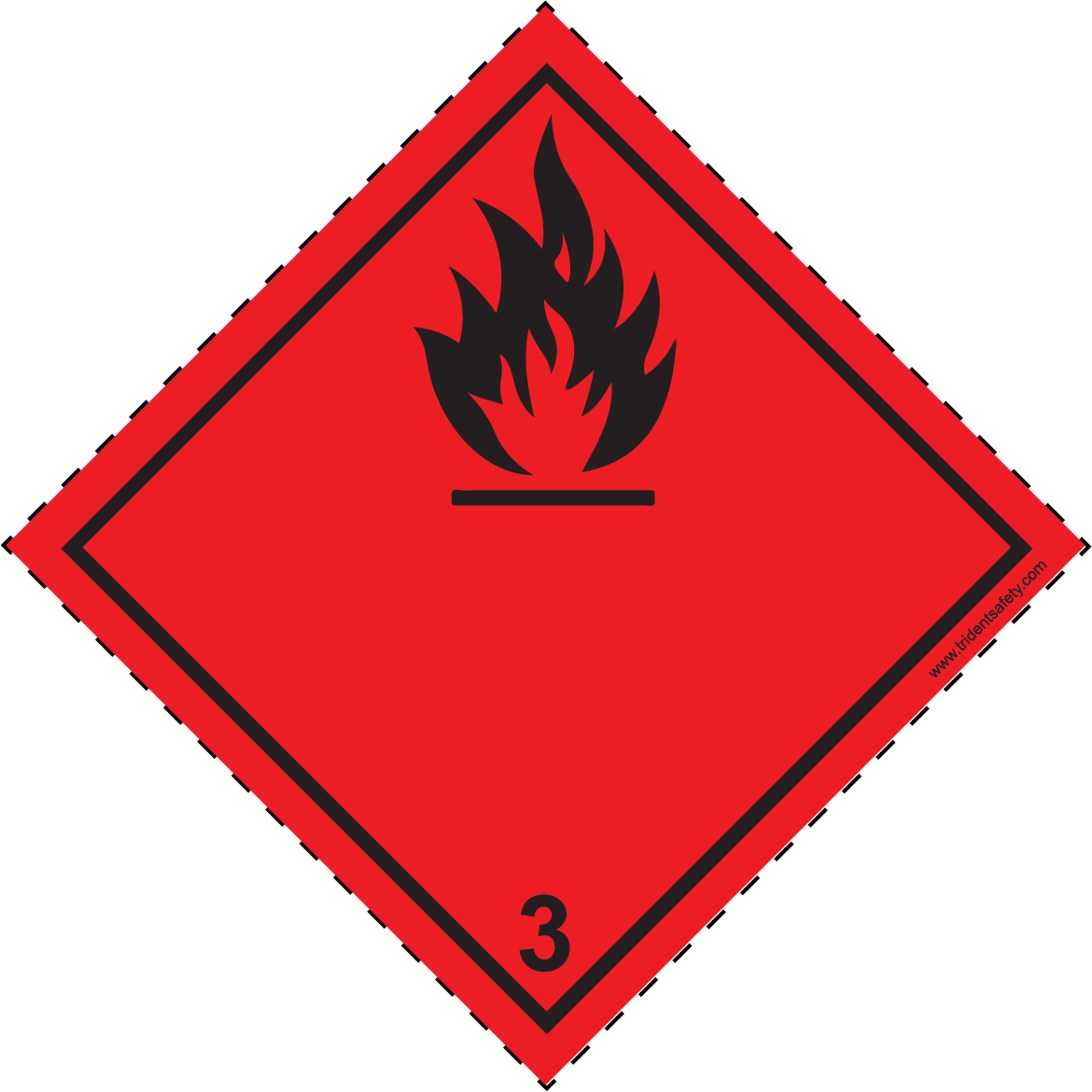
- A diamond shape positioned at a 45° angle.
- Dimensions of 100 mm × 100 mm unless otherwise permitted in the regulations.
- Approved border, symbol, and class number formatting.
- Only authorised hazard wording displayed on the lower half of the label.
Using labels that do not meet these requirements can result in rejected shipments, delays, or regulatory action, making compliance an essential part of preparing dangerous goods for transport.
Built to Withstand the Journey
Dangerous goods often pass through multiple handling points and are exposed to changing weather conditions before reaching their destination. Labels that fade, peel, or become damaged can compromise both safety and compliance. That’s why, at Trident Safety Group, we use hazard labels manufactured to British Standard BS 5609 grade. This recognised durability standard, tests labels for long-term adhesion and resistance to water, weather, and demanding transport conditions, helping ensure they remain securely attached and clearly legible throughout the journey.
Hazard Labels Are Only Part of Dangerous Goods Compliance
While compliant hazard labels are essential, they are only one part of ensuring dangerous goods are transported safely and legally.
Businesses must also ensure they:
- Select the correct UN approved packaging.
- Apply the appropriate package markings.
- Complete dangerous goods documentation accurately.
- Meet all applicable IATA Dangerous Goods Regulations.
Taking a proactive approach to compliance helps reduce delays, minimise risk, and keep supply chains moving efficiently.
How Trident Safety Group Can Help
At Trident, we support businesses with practical, reliable dangerous goods compliance solutions. Whether you’re shipping dangerous goods regularly or occasionally, our experienced team can help ensure your consignments meet the latest regulatory requirements.
Our services include:
- IATA-compliant hazard labels.
- UN approved packaging.
- Dangerous goods packaging advice.
- Dangerous Goods Safety Adviser (DGSA) services.
- Dangerous goods compliance support.
Keep Your Dangerous Goods Moving Safely
Using compliant hazard labels is more than a regulatory requirement—it’s an essential part of protecting people, cargo, and the wider supply chain. By combining high-quality hazard labels with compliant packaging and expert advice, businesses can reduce risk, avoid unnecessary delays, and ship dangerous goods with confidence.
Contact us today to learn more about our dangerous goods labelling, UN approved packaging, and DGSA services. Our team is here to help you transport dangerous goods safely, efficiently, and in full compliance with international regulations.